About the tour
In the aftermath of the D-Day landings, Carentan became a major strategic objective. Located between the Utah and Omaha Beach sectors, the town had to be secured to allow American forces to link their beachheads and continue their advance into Normandy.
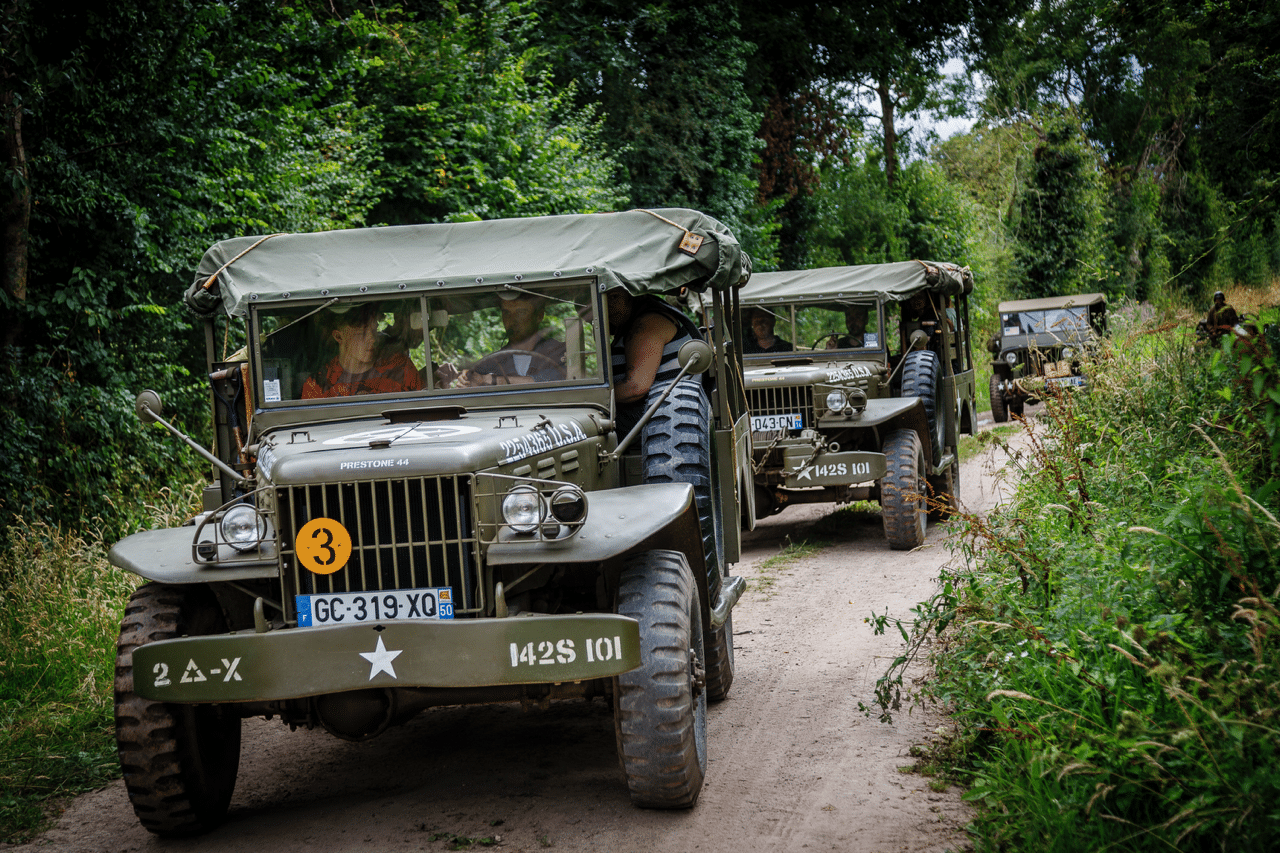
Aboard an authentic 1944 Dodge WC51, set out to explore Carentan and its surrounding countryside in the footsteps of the American paratroopers. Your guide will put the battles into context and tell you about the men, units, and events that shaped this sector.
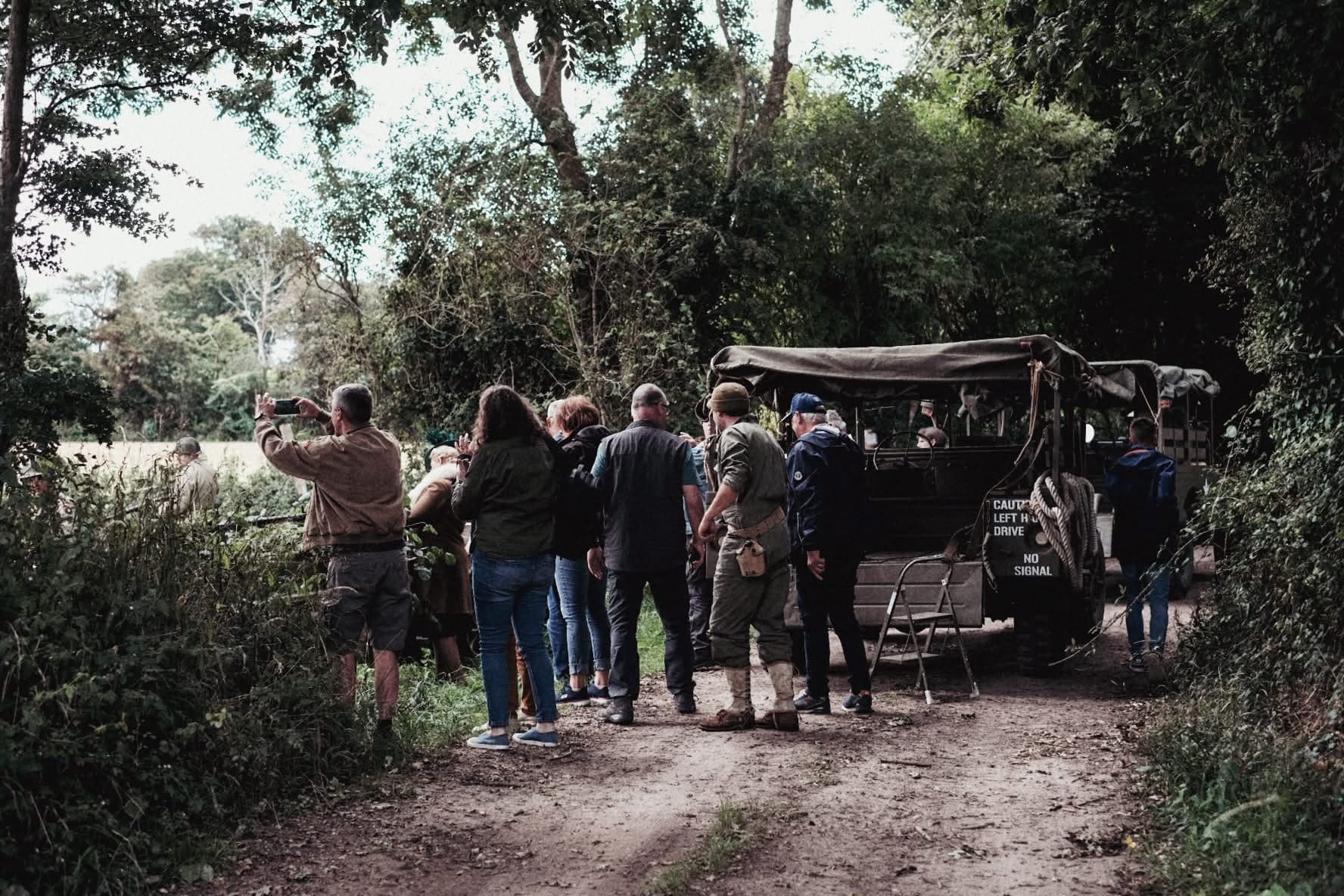
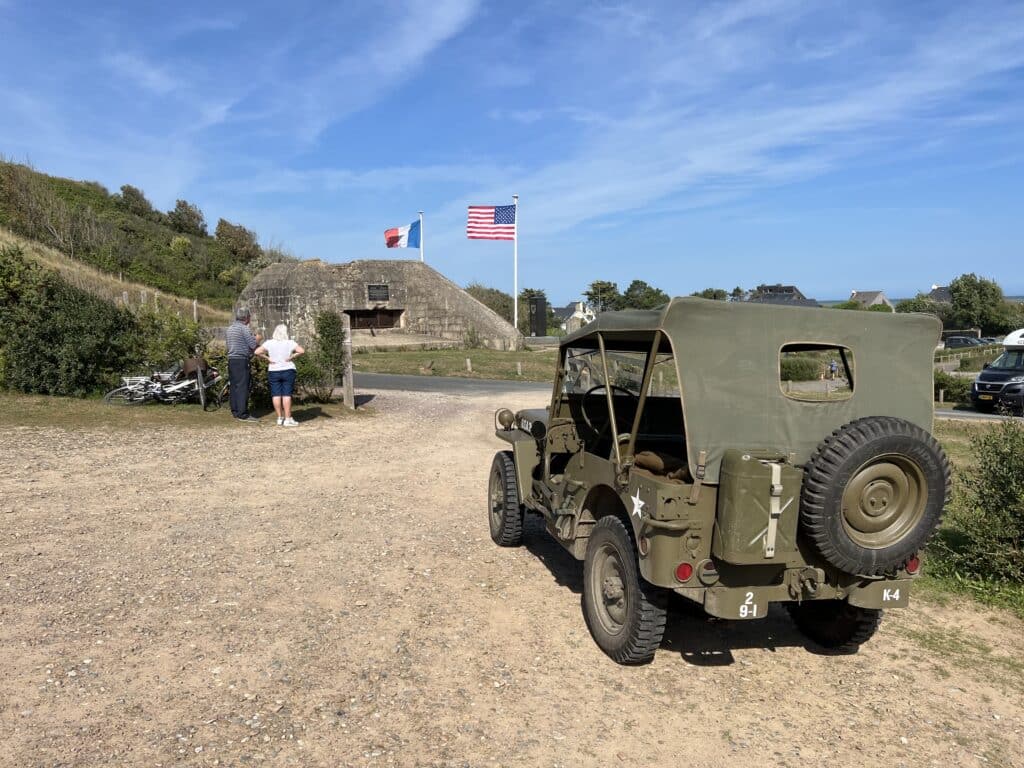
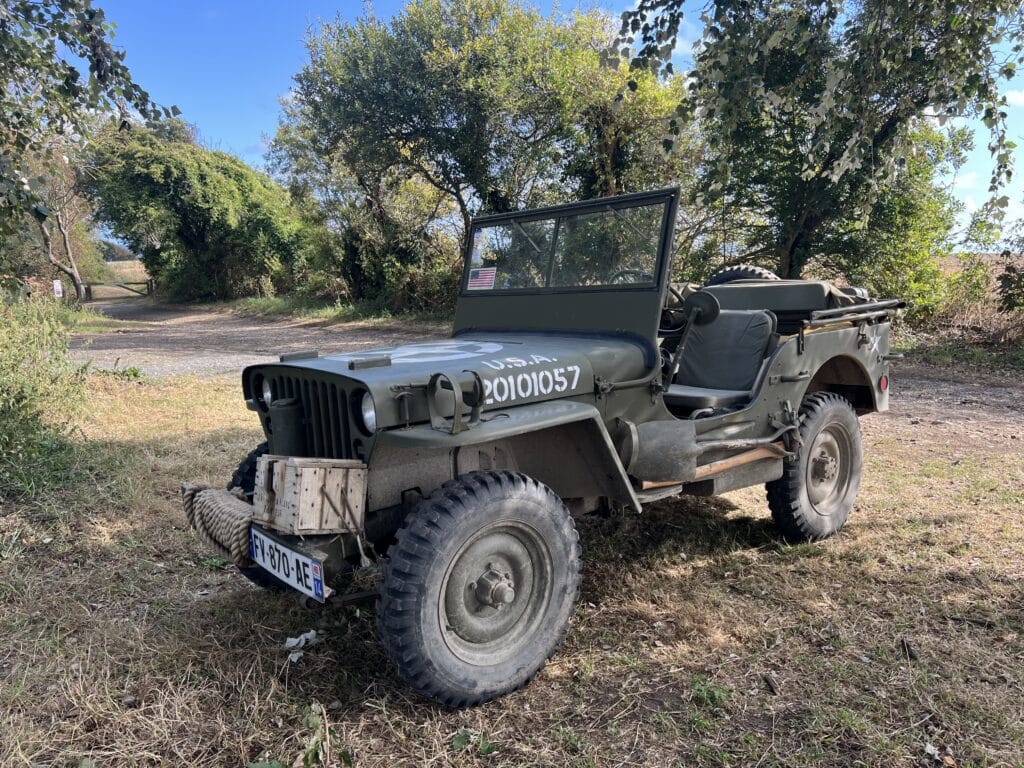
Amid the winding country roads, marshes, monuments, and battle sites, this vintage vehicle offers a unique way to explore the terrain and gain a deeper understanding of the challenges faced by the soldiers in June 1944. The historic Dodge tour takes you along the small roads around Carentan, following the history of the 101st Airborne.
The itinerary
-
The Filthy 13 Monument at Brévands
The tour begins at the Normandy Victory Museum, before heading to the first site: the monument dedicated to the Filthy 13 in Brévands.
Here, we look back at the fighting for the bridges at Brévands, which notably pitted the men of the 3rd Battalion, 506th Parachute Infantry Regiment against German forces.
We also tell the story of the small group that became famous as the Filthy 13. Specializing in demolition operations, these men belonged to the Regimental Headquarters of the 506th Parachute Infantry Regiment.
They became particularly well known for their distinctive appearance, with Native American-style face paint and Mohawk haircuts, which became iconic features of their unit.
-
Carentan, Place de la République
After getting back on the road between Brévands and Carentan, we cross a Bailey bridge built by the American engineers in 1944, one of the last remaining Bailey bridges in this area.
The second stop is at Place de la République, in Carentan.
Here, we look back at the bloody fighting led by the 101st Airborne Division to capture Carentan, a strategically vital objective that would allow American forces landing at Utah Beach to link up with those landing at Omaha Beach.
We also discuss the various ceremonies held after the liberation of the town, as well as the German artillery fire that, unfortunately, continued to strike Carentan, killing and injuring numerous civilians.
Among the victims was young Danielle Laisney, whose story bears witness to the heavy toll paid by the civilian population during the fighting for Liberation.
-
Tucker Bridge
Dernière étape du tour : le pont Tucker, situé sur la Taute, à l’est de Carentan.
A cet endroit, un pont fut construit par les hommes du 300e bataillon du génie américain et joua un rôle important dans la suite des opérations en Normandie.
Nous expliquons ici l’importance stratégique de cet ouvrage et revenons sur l’histoire tragique du Major John E. Tucker, responsable du 300e bataillon du génie américain.
Le 27 juin 1944, alors qu’il se trouvait sur place et ordonnait à ses hommes de poursuivre la construction du pont malgré les conditions difficiles, le Major Tucker fut mortellement touché par l’artillerie allemande.
Son histoire illustre le rôle essentiel joué par les unités du génie dans la progression des troupes alliées et les risques auxquels leurs hommes furent eux aussi confrontés pendant la bataille de Normandie.