About the Tour
On June 6, 1944, American soldiers landed on Omaha Beach, facing heavily fortified German defenses positioned on the heights overlooking the beach. Within just a few hours, this sector would become one of the most iconic locations of the Normandy Landings.
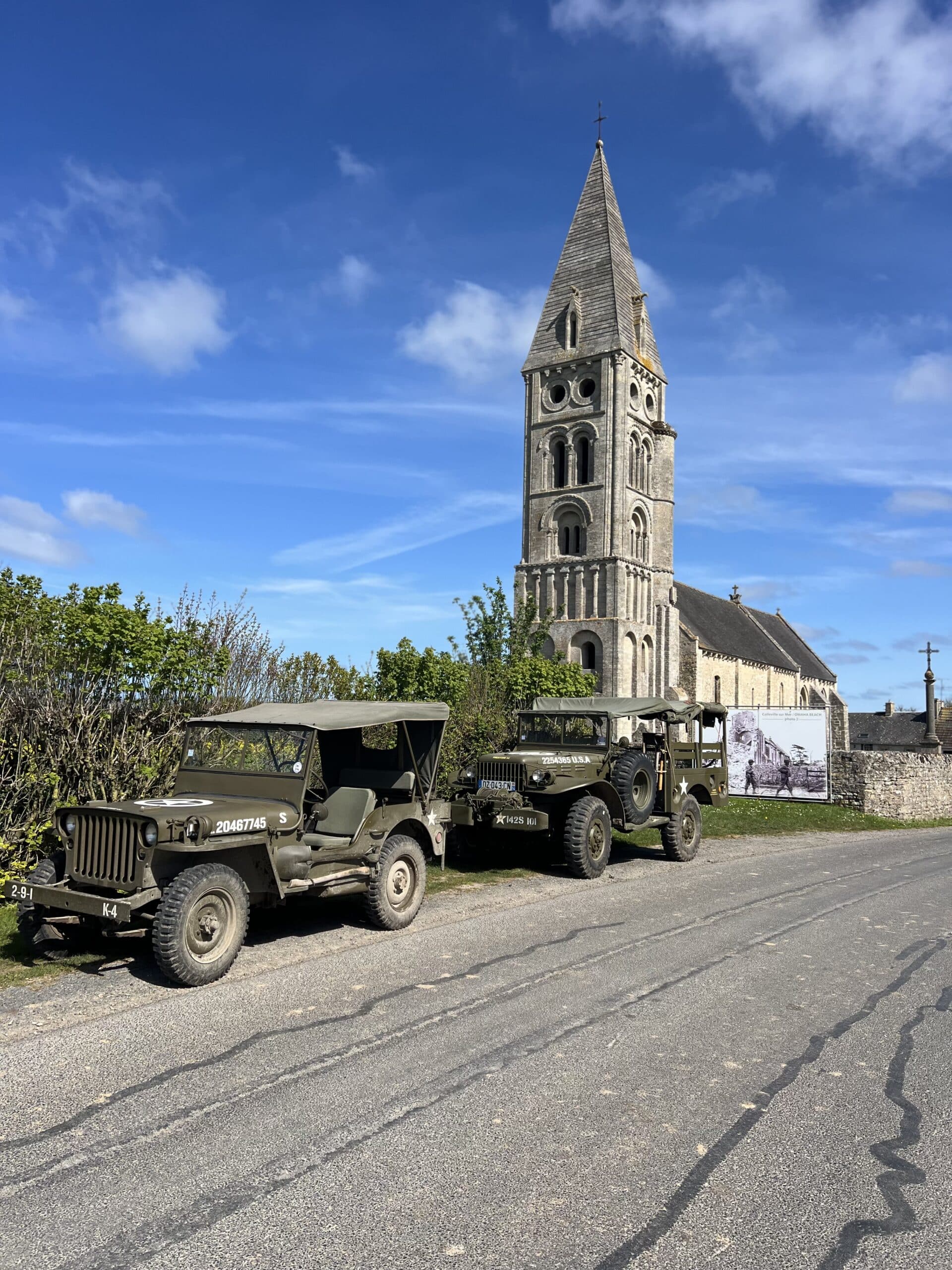
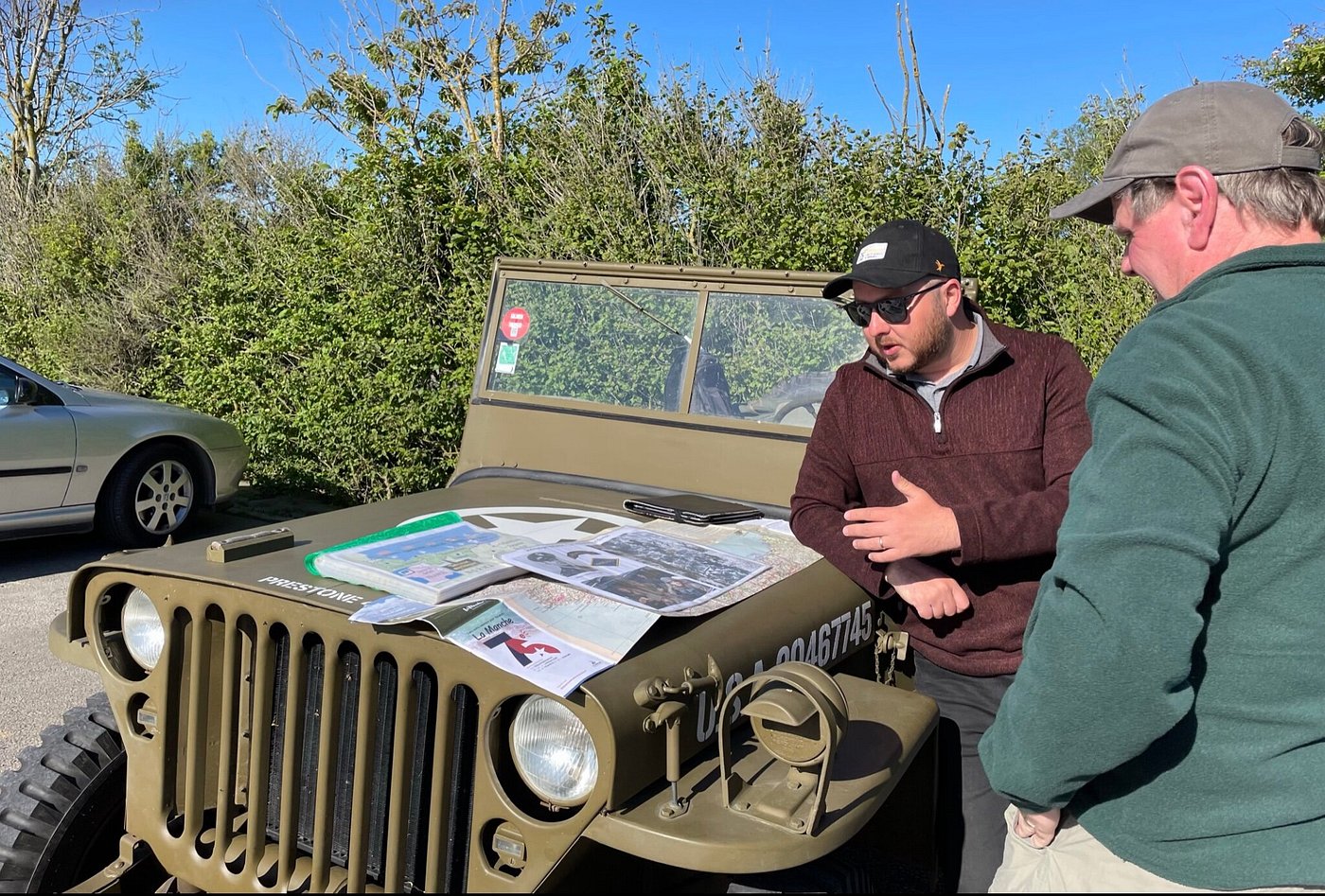
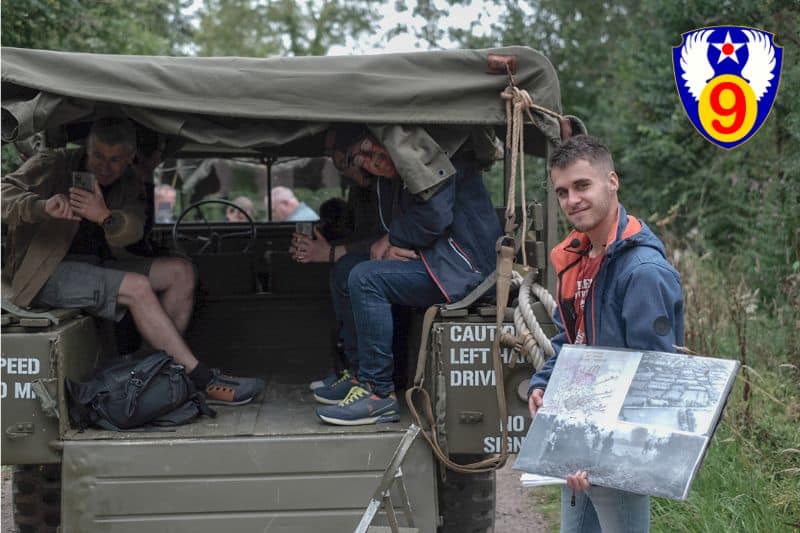
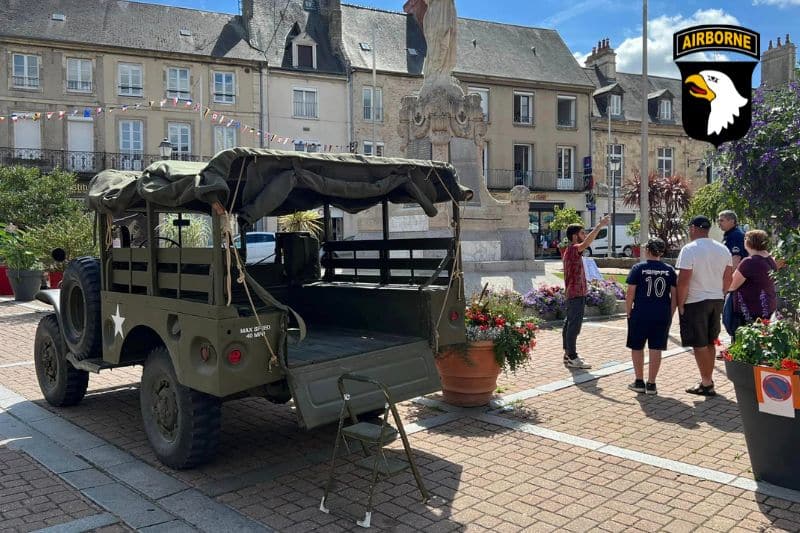
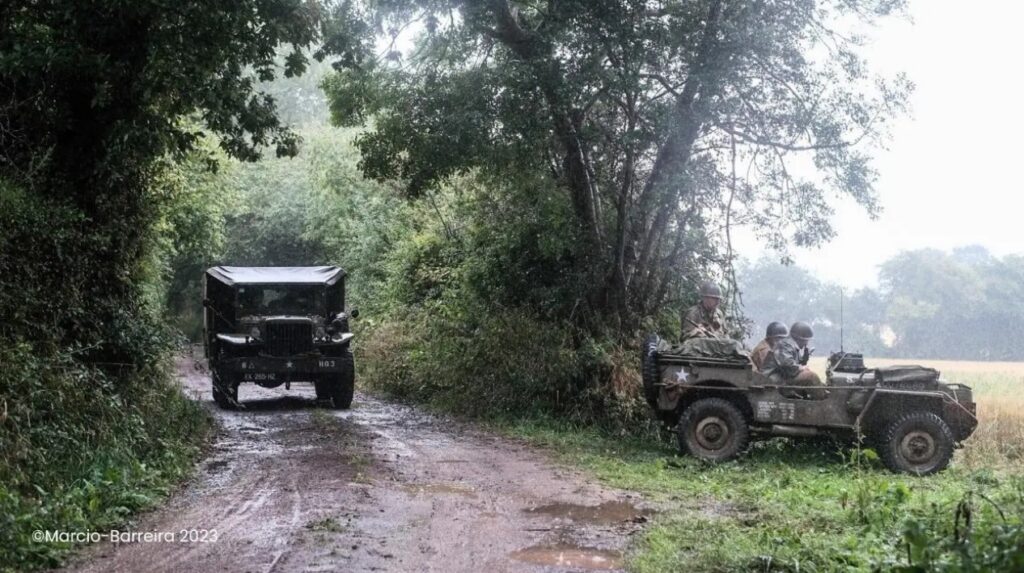
In our military Jeep, we invite you to leave the main roads behind and discover Omaha Beach from a different perspective. Your guide will bring the events of D-Day to life through the landscape itself, historical photographs, personal stories and accounts of the men who fought here.
The tour goes beyond the best-known sites. Whenever the route allows, we also take smaller roads and tracks through the Normandy bocage, reaching lesser-known locations and gaining a better understanding of the reality of the battlefield. This approach is also central to the Jeep Tours offered by WWII Veterans’ Memories.
The itinerary
-
Dog Green Sector, Omaha Beach
The tour begins in front of Hôtel du Casino Omaha Beach, in the heart of the Dog Green sector.
Before getting into the Jeep, we take some time to explore the beach and its history. Omaha Beach was once known as Gold Beach, before the code name “Omaha” was used to designate this area during the Normandy Landings.
We look at the unique topography of the area, which played a crucial role in the course of the fighting, as well as the German defenses built to protect the beach.
We also look back at Dog 1, one of the five main beach exits used by American troops on June 6, 1944, and its strategic importance in the soldiers’ advance inland.
Then, it’s time to climb aboard the Jeep!
-
WN 60, the easternmost strongpoint on Omaha Beach
We head to WN 60, one of the best-preserved German strongpoints on Omaha Beach.
Located on the heights overlooking the eastern end of the beach, this fortified position offers one of the finest panoramic views of Omaha Beach today. From here, the terrain and the organization of the German defenses become much easier to understand.
This is also where we tell the incredible story of Private Jimmie W. Monteith, whose bravery during the fighting on June 6, 1944, earned him the Medal of Honor, the highest military decoration awarded by the United States.
An exceptional location to understand the battlefield, but also to discover the personal stories of those who fought here.
-
The Normandy Bocage
We leave the coast behind and enter the Normandy bocage, a landscape that would become one of the main obstacles to the Allied advance after D-Day.
Here, we look back at the Battle of Normandy and the brutal fighting of the Battle of the Hedgerows.
Sunken lanes, embankments and dense hedgerows turned every field into a defensive position. For American soldiers, advancing through this unfamiliar landscape was extremely difficult and particularly deadly.
The Jeep allows you to experience this terrain firsthand and better understand why the bocage played such an important role in the weeks following June 6, 1944.
-
Le Ruquet, WN 64 & WN 65
The final stop of the tour is Le Ruquet, an area particularly rich in surviving remains and stories.
Here, we discover its last remaining bunker, as well as an anti-tank gun that is still visible today.
On site, we explain the strategic role of the WN 64 and WN 65 strongpoints, which formed part of the German defensive system on Omaha Beach.
Using numerous historical photographs, we draw a connection between the landscape as it is today and how it looked on June 6, 1944, while sharing the stories, anecdotes and sometimes extraordinary fates of the men who fought here.
A final stop that brings the tour to a close, right in the heart of the battlefield and among the traces of the fighting that can still be seen today.